




Tuesday 24th February 2026

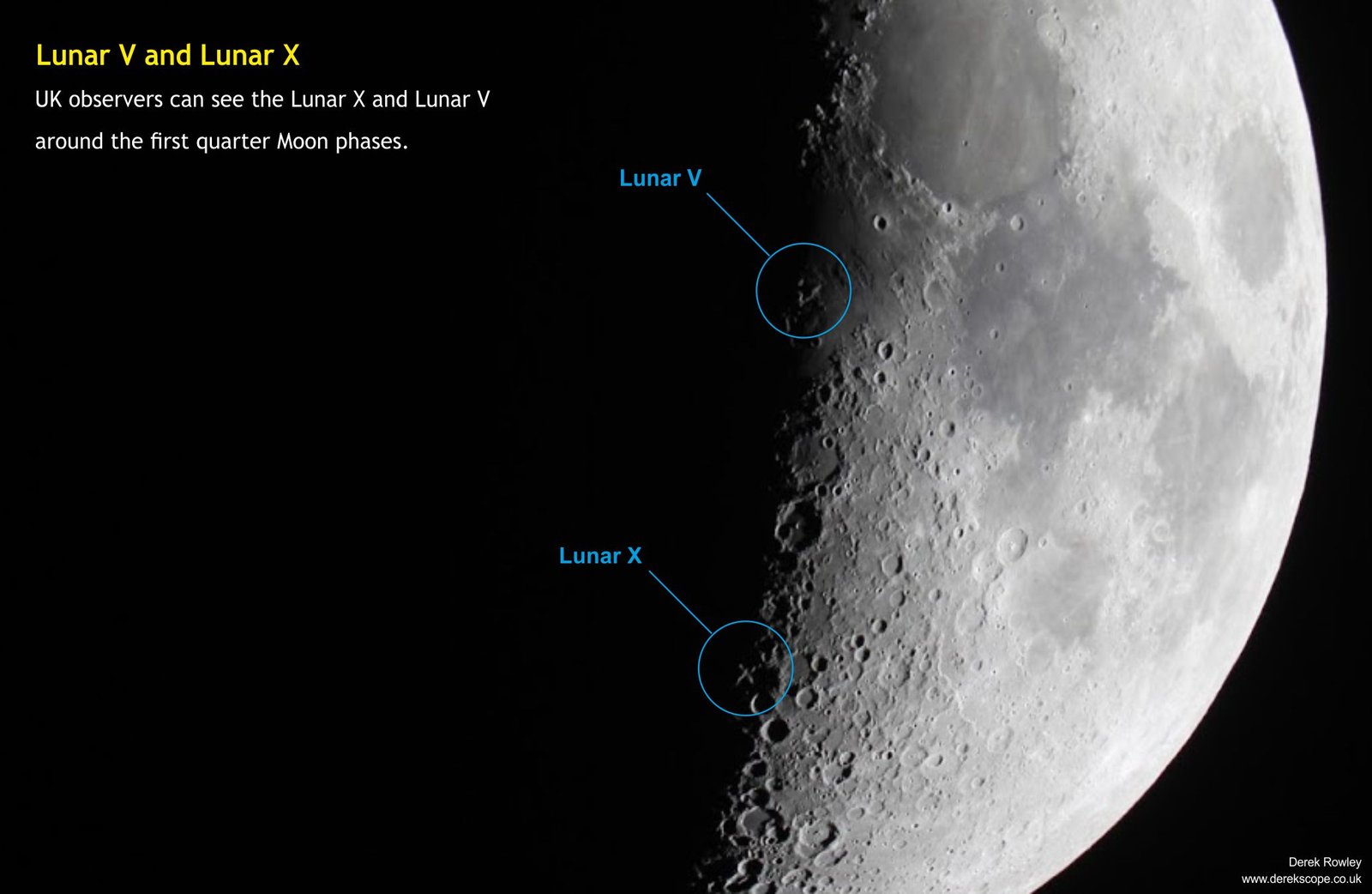
  • Lunar X and Lunar V
    Sunlight catches rims at lunar first quarter to create the bright V and X shapes.
  • Best viewing time in the UK
    The feature remains visible for about 4 hours in total, beginning to fade as the sun rises higher on the lunar surface, typically fading completely by 11:30am.
    o
    Date:
    Tuesday 24th February 2026
    o
    Start formation (become visible):
    07:30 / 7.30am
    o
    Peak visibility (fully formed as best contrast):
    09:30 / 9.30am
    o
    Fade disappearing:
    11:30 / 11.30am
    o
    Visible:
    Difficult (viewing low on the horizon)
    o
    o
  • The Moon repeats its cycle every 29½ days, so these effects happen every month, just on slightly different dates – see the complete full timetable for 2026, 2027, 2028, 2029 and 2030.
    o
  • Equipment
    While sometimes visible with high-power binoculars, a telescope is recommended to see the fine detail of the crater rims forming the Lunar X and V.
    o

Posted in Homepage (Posts) | Comments Off on Tuesday 24th February 2026

Monday 23rd February 2026

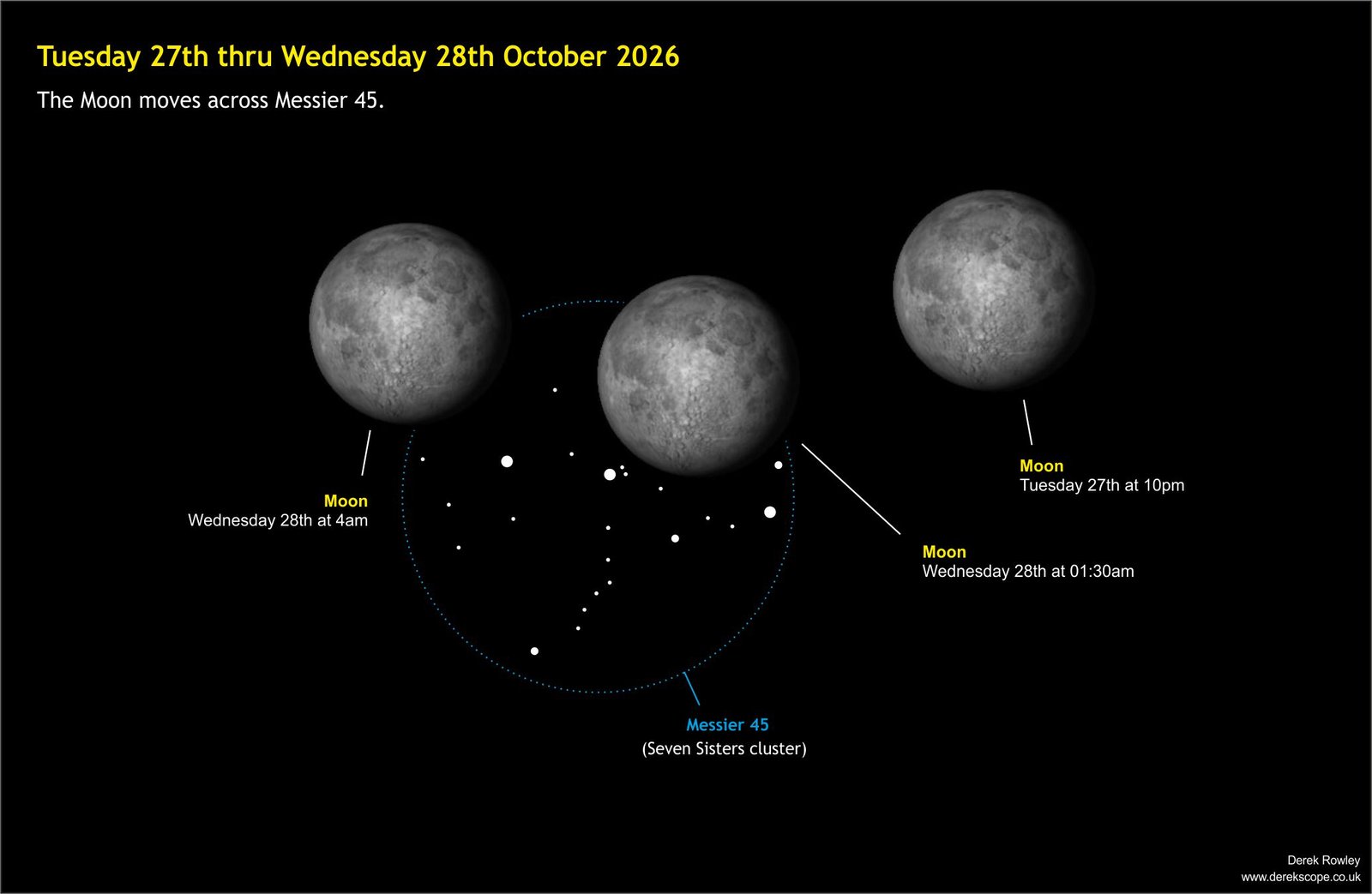
  • Moon & Seven Sisters (M45) – the pair will be visible after dusk, high in the southwest sky.
    o
  • They’ll remain visible for several hours before setting after midnight.
    o

Posted in Homepage (Posts) | Comments Off on Monday 23rd February 2026

Sunday 22nd February 2026

  • One of its moons (Ganymede) will come out from behind the planet.
    o
  • It looks like a tiny dot of light slowly appearing beside Jupiter.
    o
  • With a small telescope or big binoculars, you can see it slowly moving.
    o

Posted in Homepage (Posts) | Comments Off on Sunday 22nd February 2026

Friday 20th February 2026

  • Mercury reaches its highest altitude in the evening sky.
    o
  • This makes tonight one of the best evenings for UK observers to catch Mercury in twilight.
    o
  • Just after sunset, look west – Mercury will be at its easiest to spot for this apparition, low in the western sky.
    o
  • BSL Version

o


Posted in Homepage (Posts) | Comments Off on Friday 20th February 2026

Friday 20th February 2026

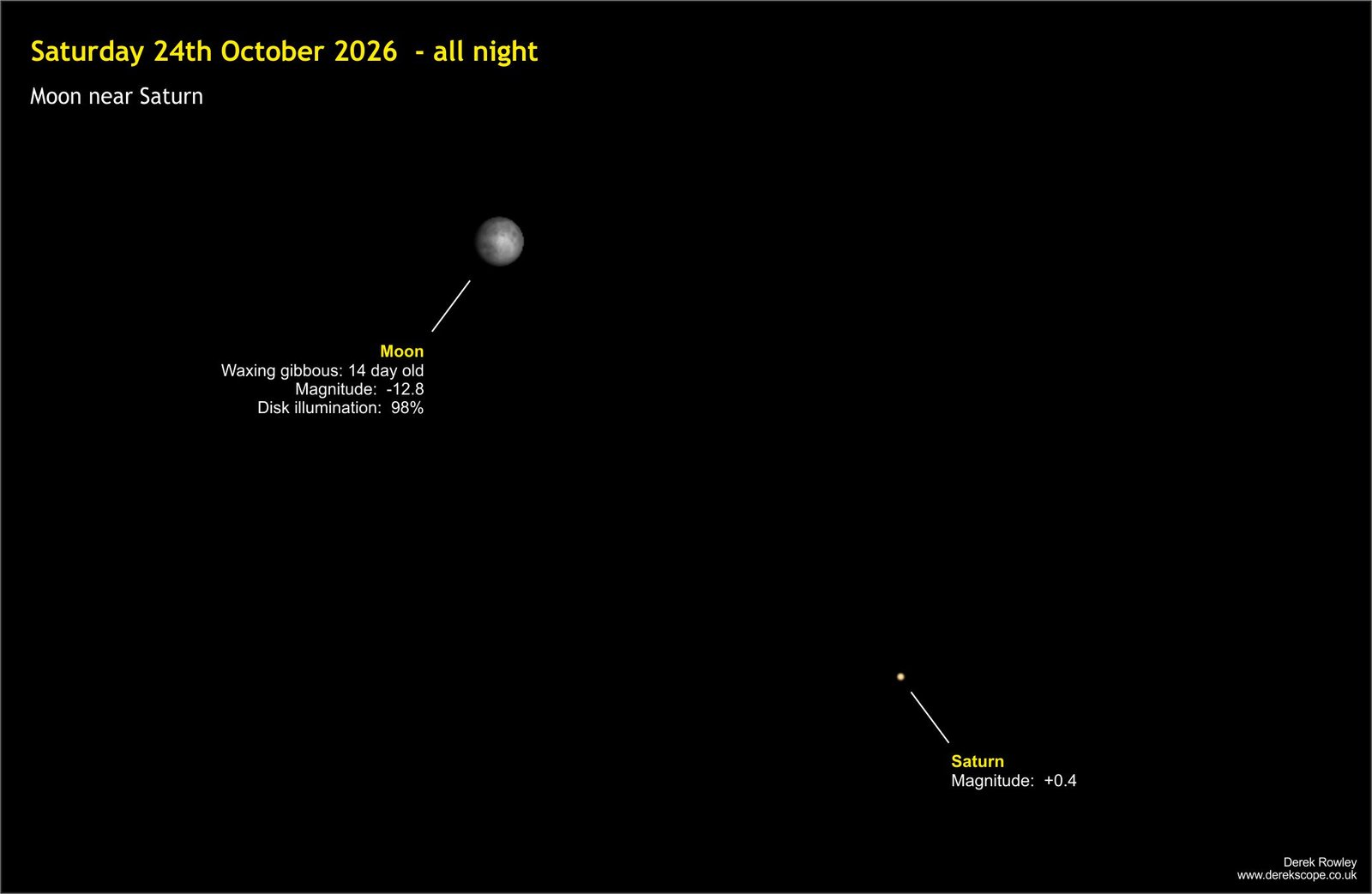
  • Conjunction of the Moon and Saturn – both will be relatively low in the sky, so clear horizon to the west will help.
    o
  • Binoculars will enhance the view, but Saturn’s rings won’t be visible without a telescope.
    o

Posted in Homepage (Posts) | Comments Off on Friday 20th February 2026

Thursday 19th February 2026

  • A 3‑day crescent next to Saturn makes a lovely, gentle pairing – a conjunction.
    o
  • They’re low in the west (Clear horizon, binocular recommended.)
    o

Posted in Homepage (Posts) | Comments Off on Thursday 19th February 2026

Thursday 19th February 2026

  • Mercury will reach its greatest eastern elongation today, appearing 18° east of the Sun in the evening sky.
    o
  • This will be the best evening apparition of Mercury for the Northern Hemisphere in 2026.
    o

Posted in Homepage (Posts) | Comments Off on Thursday 19th February 2026

Wednesday 18th February 2026

  • Both planets will be visible low in the western sky after sunset.
    o
  • Venus will shine brilliantly as the “Evening Star,” while Mercury will be fainter but still noticeable nearby.
    o
  • Mercury lower down, and the crescent Moon between them – a perfect outreach opportunity.
    o
  • Use binoculars to help after the sky fades.
    o
  • BSL Version

oooo


Posted in Homepage (Posts) | Comments Off on Wednesday 18th February 2026

Tuesday 17th February 2026

  • Annual Solar Eclipse today
    Not visible from the UK but worth saving the date in August this year.
    o
  • Although today’s annual solar eclipse can’t be seen from Britain, our next UK visible solar eclipse is on Wednesday 12 August 2026.
    o
  • It will be a large partial eclipse across the UK, with the Sun taking a dramatic bite in the evening.
    o
  • BSL Version

oooo


Posted in Homepage (Posts) | Comments Off on Tuesday 17th February 2026

Thursday 12th February 2026

  • A vertical straight‑line alignment occurs when three of the Galilean moons — usually Io, Europa, Ganymede, or Callisto — appear in a single straight line.
    o

Posted in Homepage (Posts) | Comments Off on Thursday 12th February 2026