Astronomical Unit (AU)
- To measure the distance of a star or planet
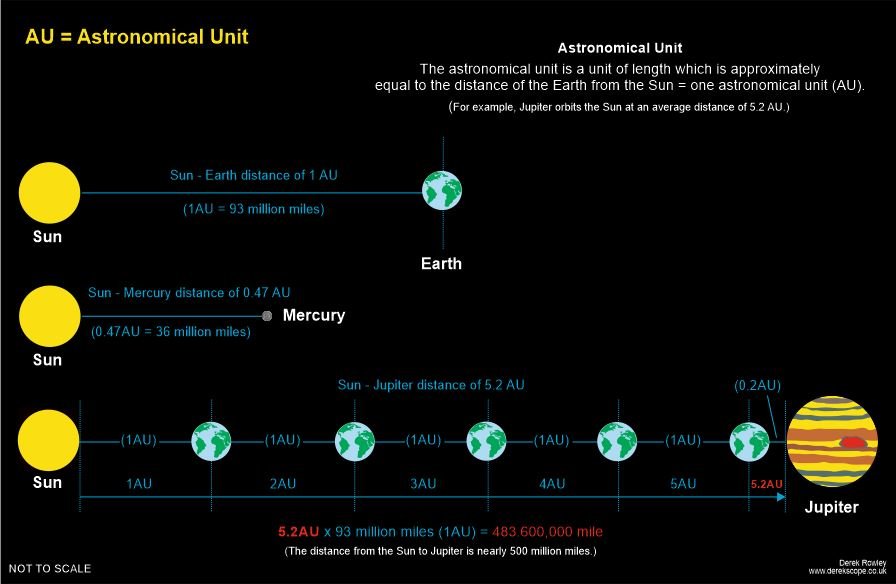
– Astronomers use a baseline of 1 astronomical unit (AU), which is the average distance between Earth and the Sun.
o
- Distance between Earth and the Sun, defined as;
o
…….–…..149,597,870 km or 92,955,807 miles. (nearly 93 million miles, so I do say 93 million miles. or 1AU.)
o
oooo
- Example:
How far is Jupiter from the Sun?
The distance from the Sun to Jupiter is approximately 779 million km / 484 million miles or 5.2AU.
o
oooo
o
Parallax Shift
o
oooo
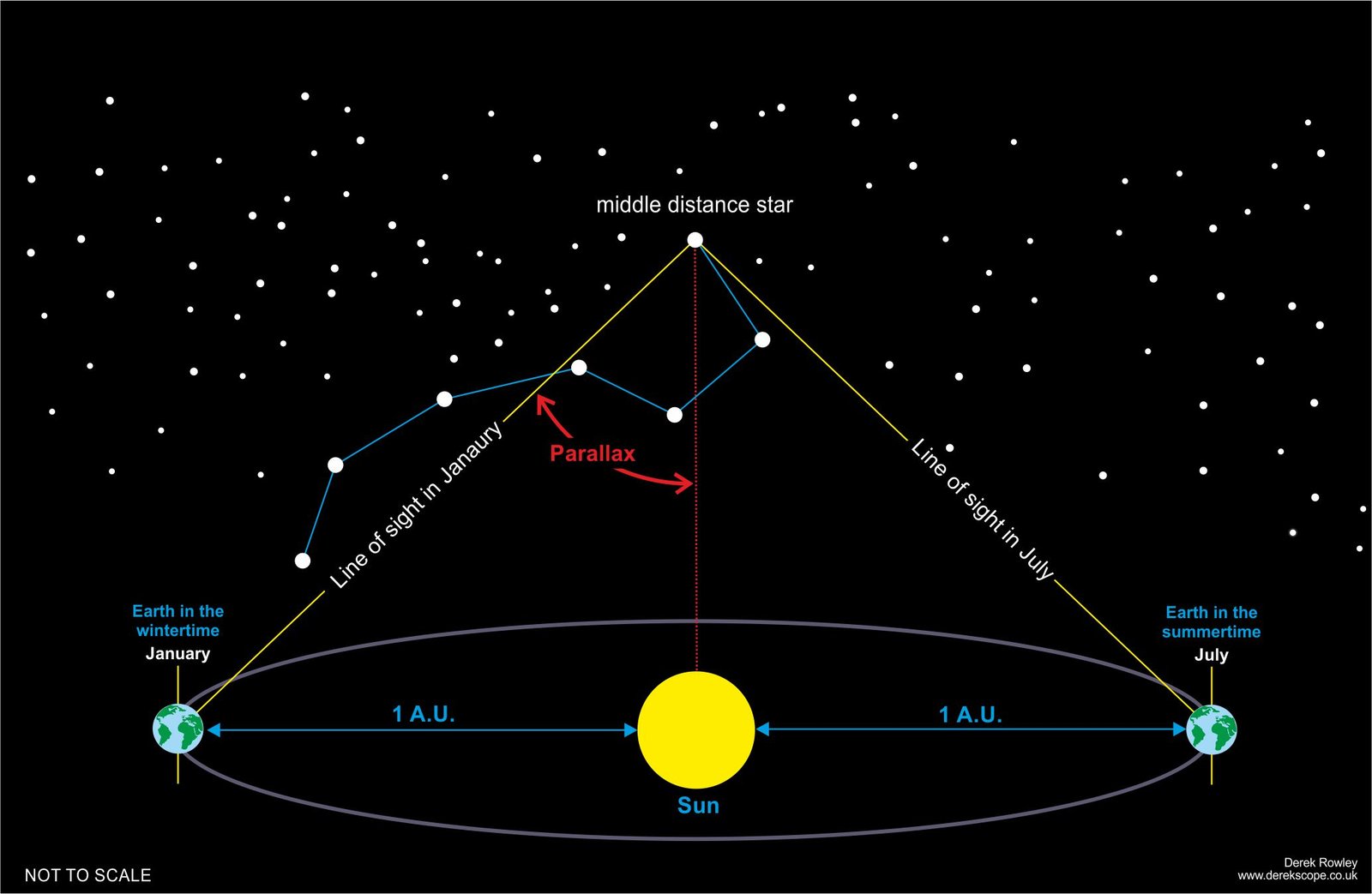
- Nearby stars distance is calculated by measuring the slight shift in angle of each star in comparison to stars far away, as the Earth orbits the Sun; this is called “Parallax Shift”.
o - Parallax shift
It can only be used to measure nearby stars, so astronomers work out the distance to faraway stars and galaxies by comparing how bright they look with how bright they actually are.
oo
oooo
oooo
Hertzsprung-Russell (H-R) diagram
oooo
oooo
oooo
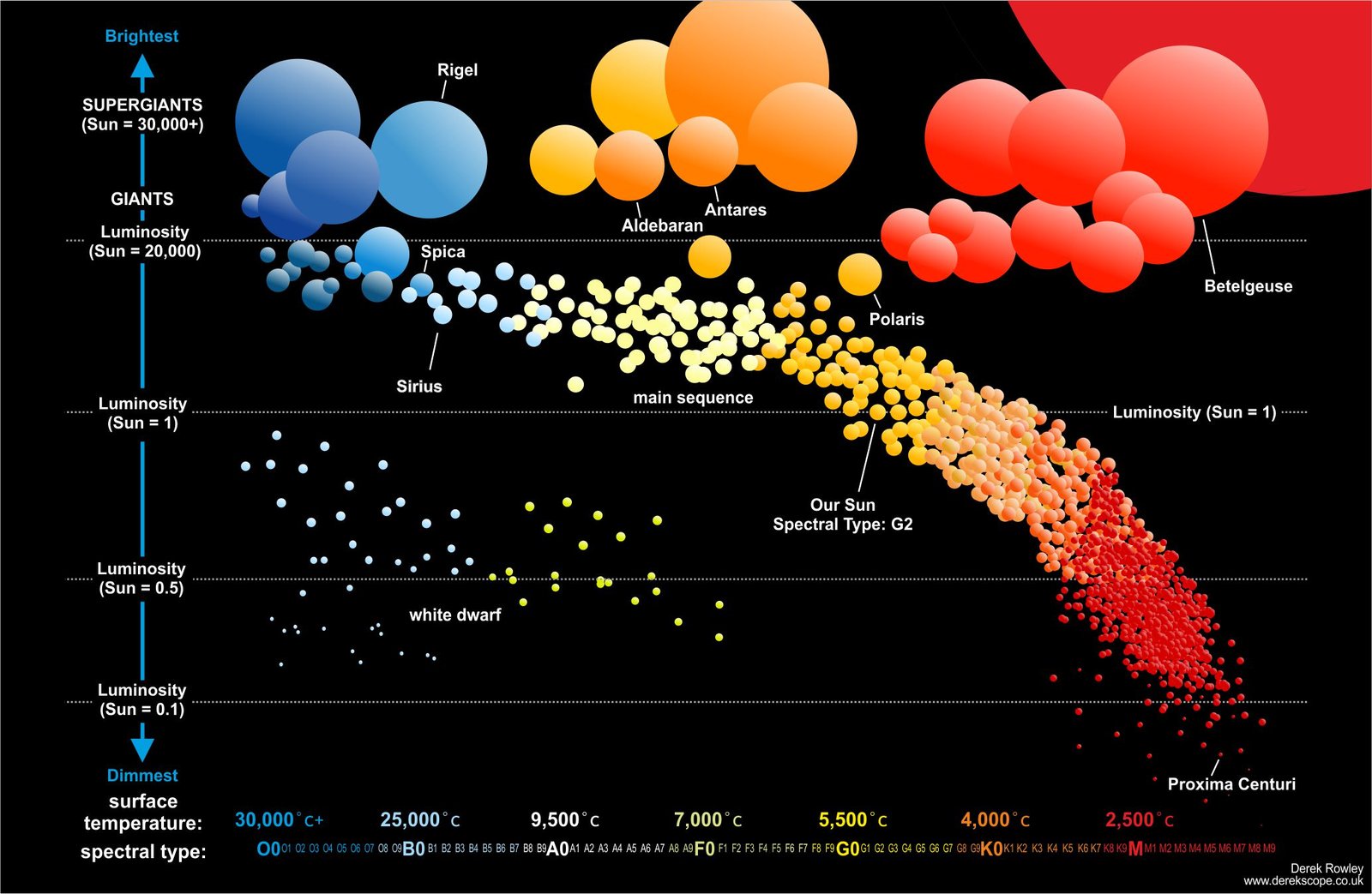
- Beyond classification and evolution, the Hertzsprung-Russell diagram offers invaluable insights into the fundamental properties and characteristics of stars.
o - Each star’s position on the diagram reveals crucial information about its;
o
– luminosity
– surface temperature
– radius
– mass
o - These classes have particular colours. Spectral type is most often written across the top of the H-R diagram going from hot, blue “O” stars (very hottest, brightest stars) on the left to cool, more red “M” stars (very coolest, dimmest stars) on the right.
o - The seven spectral classes in order of surface temperature from hottest to coolest are;
o
O.B.A.F.G.K.M
oooo
oooo
oooo
Back to The Universe / next to Light-year page.